What we throw away / 01
Technology
Phones, laptops, chargers, batteries, headphones and electronic accessories — the fastest growing waste stream on the planet, and the hardest to safely recover.
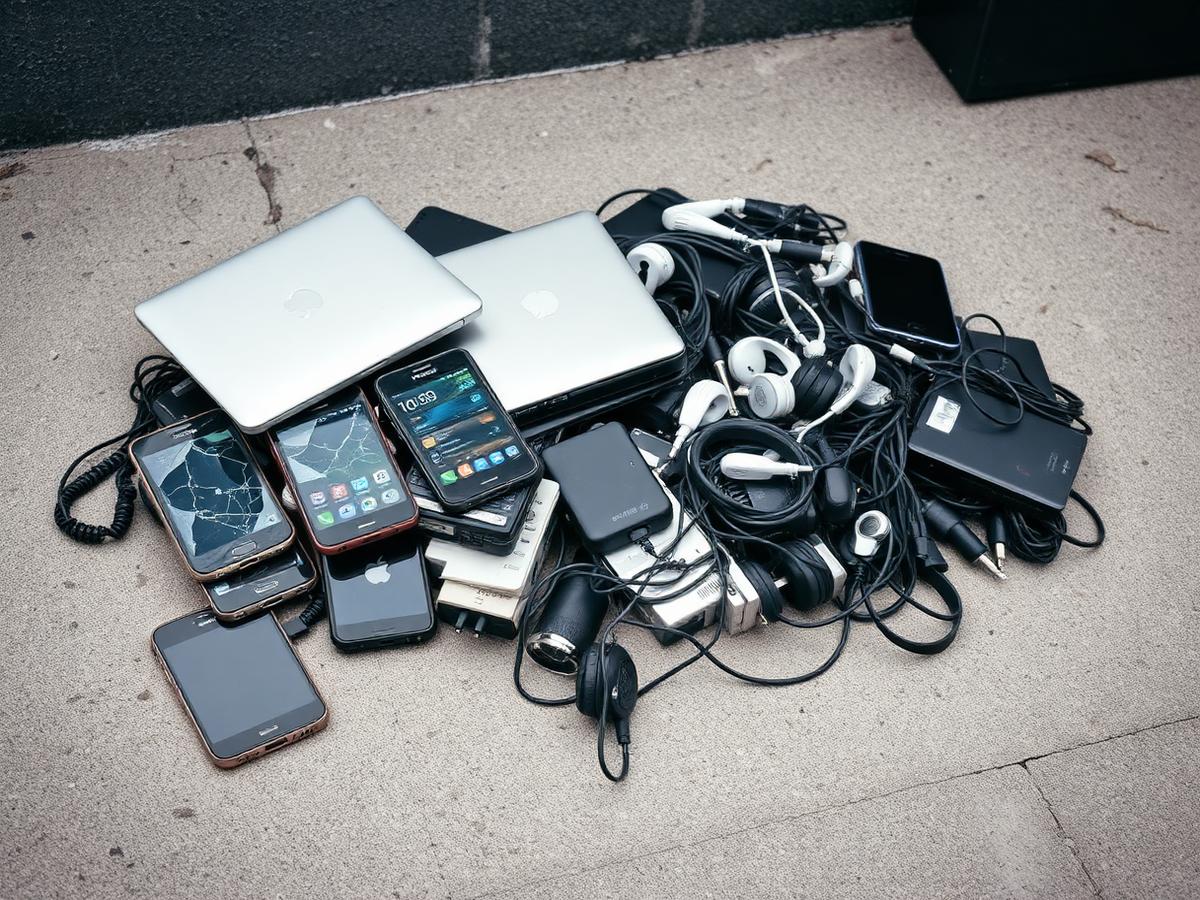
Technology should evolve. Waste shouldn't have to.
Verified Numbers
62 Million Tonnes
E-waste generated globally in 2022.
Electronic waste is rising faster than it is collected or recycled, and is projected to reach 82 million tonnes by 2030.
Source: Global E-waste Monitor 2024ITU / UNITAR — Global E-waste Monitor 2024(opens in a new tab)82 Million Tonnes
Projected global e-waste generation by 2030.
Approximately 62 million tonnes of e-waste were generated globally in 2022, projected to reach 82 million tonnes by 2030.
Source: Global E-waste Monitor 2024ITU / UNITAR — Global E-waste Monitor 2024(opens in a new tab)~2-3 yrs
Typical replacement cycle for a smartphone
<25%
Share of e-waste formally collected and recycled
Source: Global E-waste Monitor 2024(opens in a new tab)60+
Different elements packed into one small device
Unsourced figures are indicative orders of magnitude. Sourced figures link directly to the original research — see the research library.
What's happening
The pattern
- Devices are replaced on marketing cycles, not on failure.
- Glued batteries, sealed enclosures and proprietary parts make repair uneconomic.
- Software support ends long before the hardware does.
- Accessories and chargers are duplicated with every purchase.
- Recovering mixed metals and rare earths is technically hard and rarely profitable.
What helps
Do this instead
- Keep your device one or two years longer than you planned.
- Replace the battery or screen before replacing the device.
- Buy refurbished, and choose brands with published repair scores and spare parts.
- Refuse duplicate chargers and cables; reuse what you own.
- Pass working devices on, and take dead ones to certified e-waste collection.