What we throw away / 03
Plastic
Bottles, bags, containers and disposable products — materials engineered to last for centuries, designed for a single use of a few minutes.
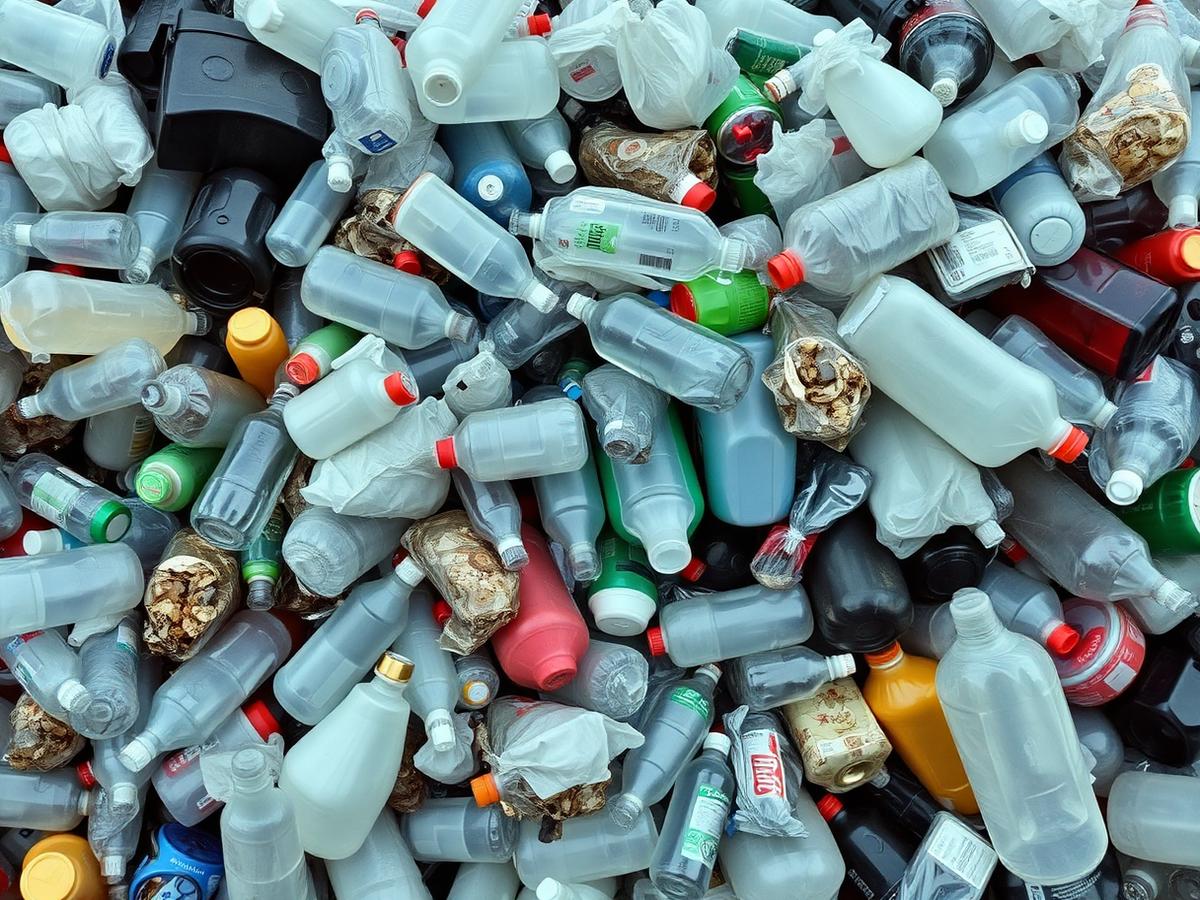
Minutes of convenience. Years of waste.
Verified Numbers
353 Million Tonnes
Plastic waste generated globally in 2019.
The OECD also reported that only about 9% of plastic waste was ultimately recycled in 2019.
Source: OECDOrganisation for Economic Co-operation and Development (OECD) — Global Plastics Outlook(opens in a new tab)12 min
Average useful life of a single-use plastic item
100s yrs
Time it persists as fragments in the environment
Unsourced figures are indicative orders of magnitude. Sourced figures link directly to the original research — see the research library.
What's happening
The pattern
- Single-use is the default, not the exception.
- Multi-layer and coloured plastics have almost no recycling market.
- Recycling capacity is far smaller than production volume.
- Fragments become microplastics in water, soil and food.
- Refill infrastructure is missing in most cities.
What helps
Do this instead
- Carry a bottle, cup and bag — three objects that remove hundreds of items a year.
- Refuse straws, cutlery, sachets and free samples by default.
- Buy in bulk or refill where possible.
- Choose glass, steel or paper where the alternative is genuinely better.
- Support deposit-return and refill schemes in your area.