What we throw away / 04
Food & Packaging
Delivery containers, wrappers, cups, sachets and unnecessary packaging. One meal can generate six pieces of waste that outlive the person who ordered it.
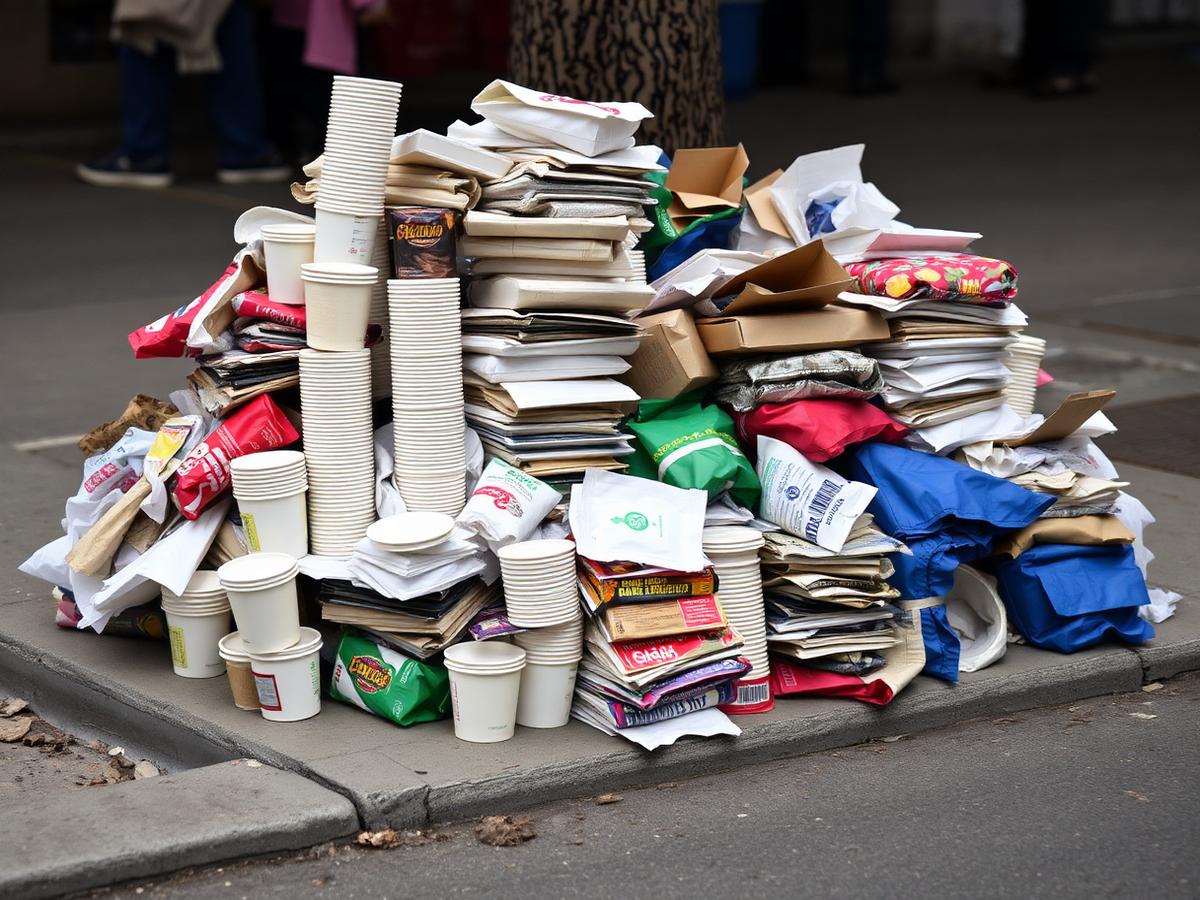
The meal disappears. The packaging remains.
Verified Numbers
2.1 Billion Tonnes
Municipal solid waste generated globally in 2023.
Global municipal solid waste generation was approximately 2.1 billion tonnes in 2023 and is projected to reach 3.8 billion tonnes by 2050.
Source: UNEP 2024United Nations Environment Programme (UNEP) — Global Waste Management Outlook 2024(opens in a new tab)$640.3 Billion
Projected annual cost of waste by 2050 without urgent action.
Without urgent action, the global annual cost associated with waste management and its wider environmental, health and climate impacts could reach approximately $640.3 billion by 2050.
Source: UNEP 2024United Nations Environment Programme (UNEP) — Global Waste Management Outlook 2024(opens in a new tab)5-8
Waste items in a typical single delivery order
~20 min
Time between unpacking and discarding
Mixed
Most food packaging combines materials that can't be separated
Unsourced figures are indicative orders of magnitude. Sourced figures link directly to the original research — see the research library.
What's happening
The pattern
- Delivery apps optimise for speed, not for material use.
- Food-soiled packaging is rejected by most recycling systems.
- Sachets and pouches are cheap to make and impossible to recover.
- Cutlery, napkins and extra bags are added without being requested.
- 'Compostable' packaging rarely meets an industrial composter.
What helps
Do this instead
- Order less often, and eat in when you can.
- Always opt out of cutlery and extras.
- Bring your own container to takeaway counters that allow it.
- Cook one more meal a week at home from unpackaged ingredients.
- Ask restaurants for reusable or minimal packaging — demand shifts supply.